
Experience the Wonders of Yellowstone in Spring
Updated: Aug 13
So it begins! The gates to Yellowstone are open.
As of Friday, April 17th, 2026, the West entrance in West Yellowstone and the North Entrance in Gardiner are officially welcoming visitors for the summer season. From either entrance, you can reach some of Yellowstone’s most beloved destinations: Old Faithful, Mammoth Hot Springs, Lamar Valley, and the breathtaking Grand Canyon of Yellowstone. So many other wonders of the park are waiting to be explored.
Additional roads through the park’s eastern and southern sections will continue to open throughout May as crews finish clearing routes. Regardless, there’s more than enough to keep you busy and adventuring. The park is open and waiting. Where will you start?
Wildlife is Moving
Spring is one of the best times of year for wildlife in Yellowstone National Park, and it’s happening right now.
Grizzly bears have been emerging from hibernation across the region since March. Males typically venture out first, followed by females with cubs through April and May. They’re hungry, active, and often found in the park’s lower valleys where wide-open sightlines make for incredible viewing opportunities. As a reminder, be sure to keep at least 100 yards of distance from any bears you spot.
Bison calving is also underway in the park. Calves are typically born in late April and early May with rust-colored coats that earn them the beloved nickname “red dogs.”
And if you’re after wolves, Lamar Valley in early spring is as good as it gets. With wide-open terrain, less foot traffic, and wolf packs actively hunting, it’s one of the best places in the park to spot them. Several packs call the Lamar Valley home, making your chances especially strong this time of year.

The Thermal Features Are Stunning
There’s something about Yellowstone’s geothermal landscape in spring that hits differently. The cool air pulls the massive plumes of steam into dramatic columns you can see from miles away. Plus, with fewer visitors on the boardwalks, the whole experience feels quieter and more intimate than during peak summer.
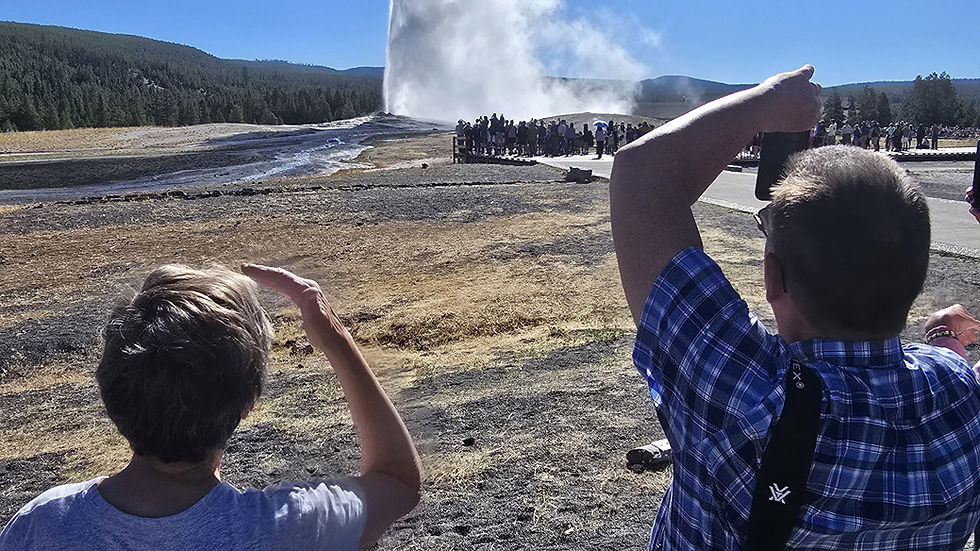
One of the most famous attractions, Old Faithful, erupts roughly every 90 minutes and is accessible all season. Grand Prismatic Spring’s vivid rings of color are as striking as ever against the early-season landscape.
These aren’t just photo opportunities; they’re a reminder that you’re standing on top of one of the most geologically active places on Earth. That’s something worth experiencing at least once in your lifetime. And especially for photographers, that natural visual magic is as good as it gets.
The Scenery Alone is Worth the Trip
Even if wildlife and geysers weren’t a factor, Yellowstone National Park in spring is visually stunning on its own terms. Mammoth Hot Springs is particularly striking this time of year, with its terraced formations steaming against the cold morning air. The Grand Canyon of Yellowstone glows in shades of yellow and ochre that feel almost unreal. Even better, the peaks surrounding the park are still draped in white from winter, creating scenery that makes you want to pull over every half mile or so.

Spring and early summer are also great seasons for waterfalls. As snowmelt feeds the Yellowstone River, the Upper and Lower Falls run at their most powerful. The Lower Falls alone drop 308 feet, nearly twice the height of Niagara Falls, and at peak spring runoff, push over 63,000 gallons of water per second over the edge. That’s a lot of water, and a rare sight to see in person.
Preparing for Your Yellowstone Adventure
Spring in Yellowstone can be gorgeous and unpredictable in the same hour. Many trails and boardwalks are still snow-covered, road conditions can change quickly, and services within the park are limited during the early weeks. Always check the current park conditions before heading out on your trip, and come prepared. Pack layers, waterproof shoes, and be flexible in your planning. If you want a full rundown on what to bring, check out our Yellowstone packing list.
Once you’re in Yellowstone, it can be a lot to navigate. As the temperature increases, so do the crowds — parking lots fill faster, wildlife traffic jams are more frequent, and partially closed roads can take the shine off the trip quickly. The difference between sitting in an hour-long backup behind a bison jam and actually watching a grizzly explore a hillside at dawn often comes down to having someone in the vehicle who already knows the park.
That’s where we come in. Our guides have been out since opening weekend and already know where the bears are moving, which valleys the wolves are working, and where you’ll find the best views without the crowds. Whether you’re coming from West Yellowstone or Jackson, we take the guesswork and the stress out of it completely.
Choosing the Right Tour for You
Not sure which tour fits your trip? Our guide to choosing the right Yellowstone tour is a great starting point. Spring doesn't wait—book your 2026 tour today.


Comments